Set up like a tiny art school
Craft sessions live or die in the first two minutes. Before announcing anything, lay a wipeable table cover, decant glue into a pot with a spreader, pre-cut what little scissors can’t manage, and fill one washing-up bowl with warm soapy water like a hand-washing station. An apron or an old t-shirt beats any lecture about sleeves. The craft rule that saves the most joy: the child decides when it’s finished. A four-year-old’s “done” after two marker strokes is a complete artwork, frame it accordingly.
Salt dough treasures
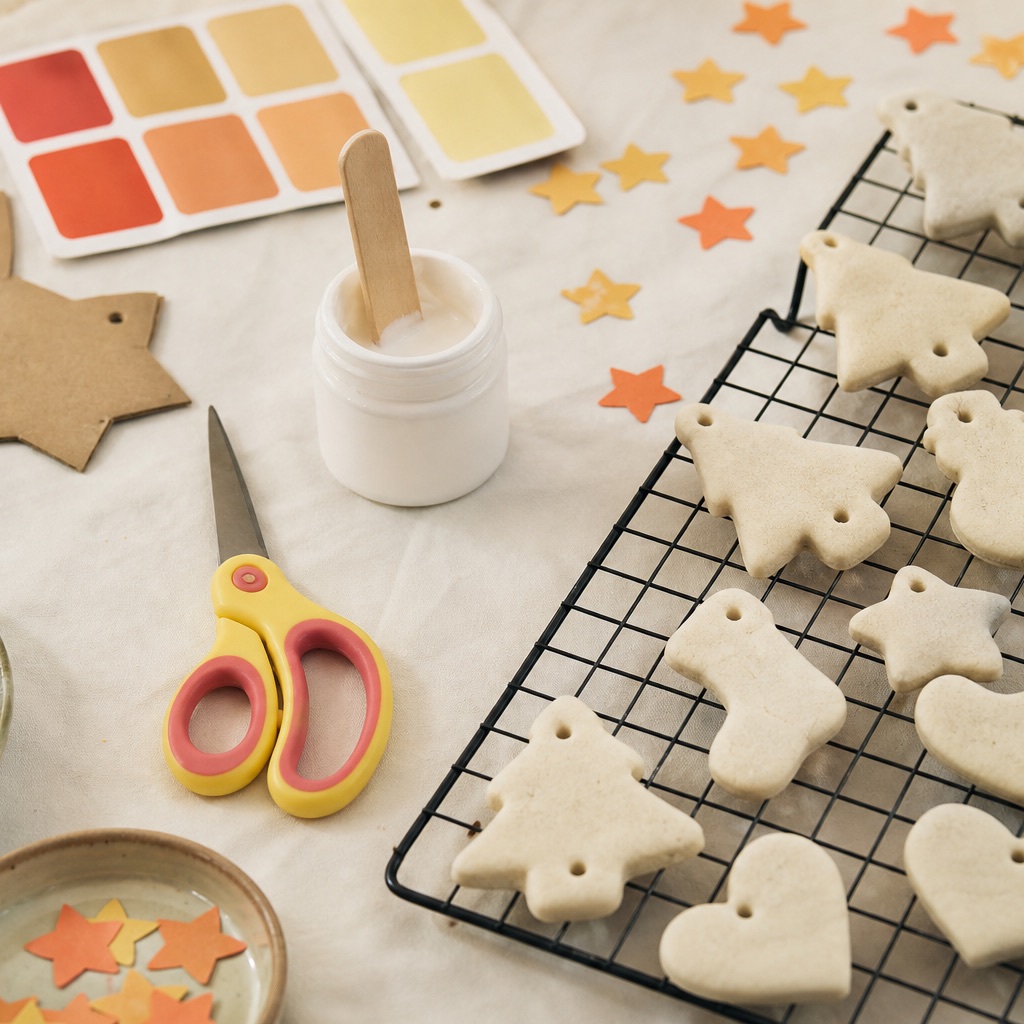
You need: 2 cups flour, 1 cup salt, 1 cup water, oven at low heat · ages 2+ · mess: medium
Mix, knead, then shape: handprints, pendants, tiny pizzas, beads for threading (make the holes before baking with a straw). Dry slowly in a low oven, then paint with whatever you have. Salt dough decorations become the gifts grandparents actually keep. Little hands get a full workout, and the recipe itself is a counting exercise: see toddler activities for more kitchen-adjacent play.
Cardboard everything
You need: boxes of all sizes, strong tape, paint or markers · ages 3+ · mess: low
A box is a spaceship, a turtle shell, a shop counter, a doll bed, a robot suit with arm holes. Cut (grown-up job), tape (child job), decorate (everyone’s job). Junk modeling teaches structural thinking (what supports what, what bends, what holds) which is the same physics as the spaghetti towers in our school-age bank, just with more glitter.
Homemade paint recipes
You need: flour or yogurt, food coloring, muffin tin · ages 1+ · mess: heroic
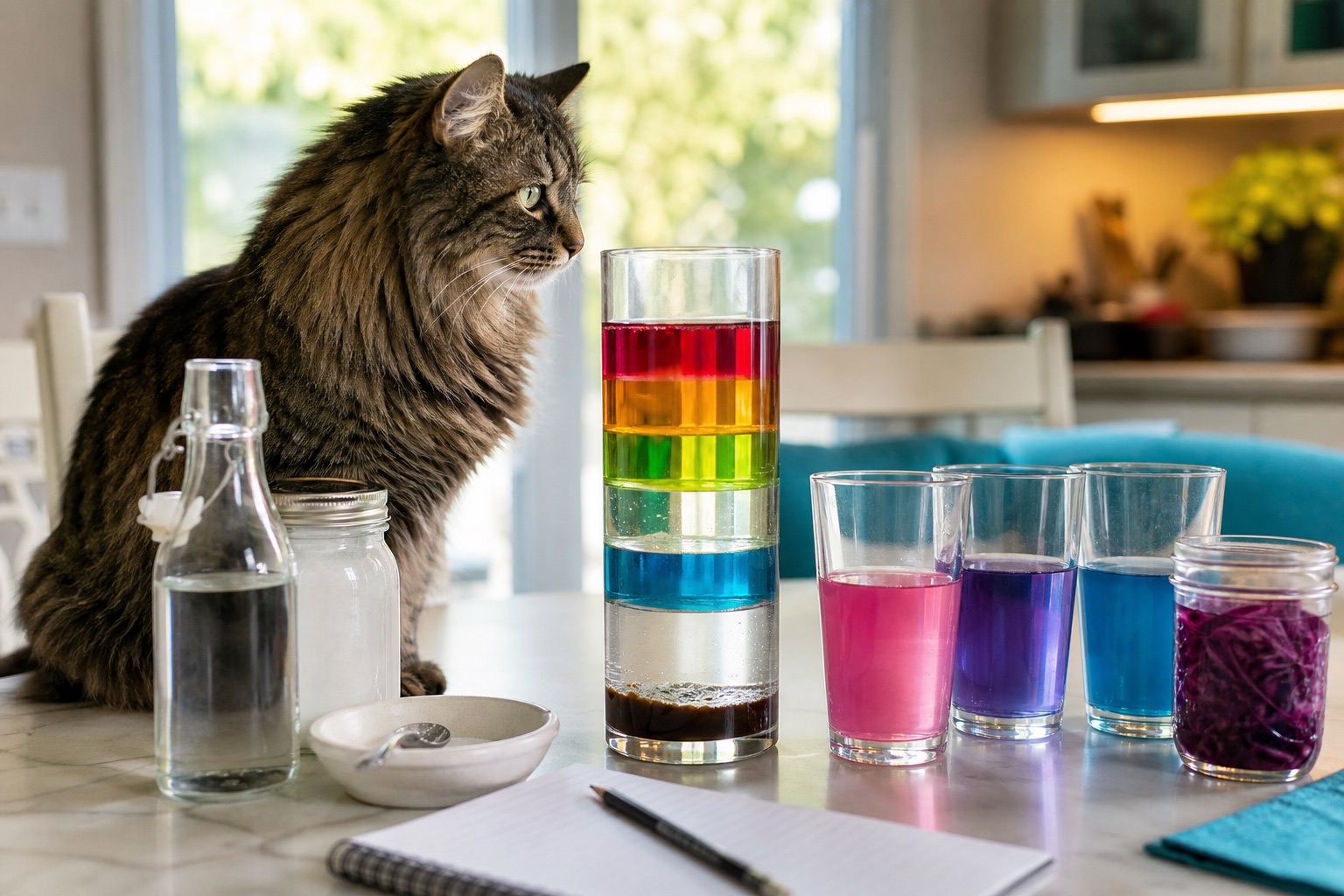
Yogurt paint (plain yogurt + a drop of food coloring per muffin cup) is safe for the smallest artists who still taste-test everything. Flour-thickened washable paint works on paper with brushes, cotton buds or toy-car wheels driven through puddles of color. Bathtub painting variants turn mess management into a game: paint the tiles, then rinse everything down together. It borders on science, mixtures and color blending belong to our easy experiments family too.
For families who want to see where local art actually happens, the North State keeps a busy cultural calendar. University music and theatre departments, regional symphonies and student galleries all post seasons, recitals and juried shows, and many events are free or low cost. A parent can plan a weekend around a concert, a print exhibition or a campus theatre production, then talk about it at home. The archived School of the Arts portal at CSU, Chico documents years of that activity, listing ensembles, galleries and venues across the region.
Nature collages
You need: a collected treasure carton (see outdoor hunts), card, glue · ages 2+ · mess: low
Leaves become trees, twigs become frames, petals become fireworks. Gluing nature treasures onto card is the perfect bridge between an outdoor mission and a calm table activity (and the collecting walk already happened), so the energy is spent. Laminate or photograph the results; pressed-leaf bookmarks make lovely gifts.
Paper plate masks and puppets
You need: paper plates, lollipop sticks or straws, crayons, safe scissors · ages 3+ · mess: low
Cut eye holes, add ears, horns, whiskers or a trunk, tape a stick: instant theater. Masks unlock character voices and story-making; a paper-plate wolf interviewing a paper-plate pig remains premium entertainment (the shadow-theater upgrade lives in preschool activities). Make a cast of six and you have a repertory company.
Friendship bracelets and first weaving
You need: embroidery thread or thick wool, cardboard loom · ages 6+ · mess: minimal
School-agers love the slow, patterned concentration of braiding: three-strand braids first, chevron patterns for experts, cardboard looms for weaving bookmarks. Following a pattern is pre-coding; finishing one is pride. Quiet, portable, and perfect for long train rides: a favorite from our rainy-day kit.
Recycled marble run
You need: cardboard tubes, boxes, tape, marbles · ages 5+ · mess: medium · small parts: supervise
Tape tubes to a wall or the side of a cabinet at descending angles, test, adjust, extend. Every version teaches slope, momentum and iteration, engineering with a rattle of marbles as applause. School-age engineers can add traps, forks and a bell at the finish.
Grown-up tip: keep a “making box” (one crate of clean recycling), tape and scissors that only opens at craft time. Scarcity keeps novelty alive. Display work on a rotating “gallery wall” (string and pegs) for one week, then quietly archive; rotation keeps the gallery sacred and the fridge door breathable. If a child asks who else hangs work on a wall, ten minutes spent together on a gallery page full of artists to discover usually ends with a fresh sheet of paper on the table. More on why process beats product in learning through play.
Mess ratings, decoded
Minimal: works at the dining table before dinner. Medium: table covered, smocks on, floor swept after. Heroic: an old sheet under the chairs, bath scheduled, camera ready. Choose the rating that matches your energy, not your ambition: a happy table produces more art than an ambitious one. And when glue dries in the carpet anyway, console yourself with the rescue kit: cleanup games count as activities too.
Once the paint is dry and the glitter has settled, you may want a change of pace that still keeps hands busy. A small garden works well for that. You do not need a yard: a pot on a balcony is enough. Children can fill pots with soil, press in seeds, and water them with a small can. Choose quick crops like radishes or lettuce, and check the soil each morning together. For simple steps and safe plants, see these garden projects for kids.
If your child enjoys painting and wants to keep going after the brushes are rinsed, the magazine has plenty of next steps. You can move from simple colour mixing into wet-on-wet work, where paper is dampened first and paint spreads on its own. This suits children who like loose, soft shapes and gives them a new challenge without new supplies. Older kids can try layering thin coats once each one dries, which builds depth and teaches patience. For a clear walkthrough of washes, layering and how to rescue a muddy patch, see this guide to glazing in watercolor.
If your kids enjoy cutting and gluing, they may ask why we scoop out a pumpkin once autumn arrives. The answer goes back further than costumes and sweets. You can read a short history of the holiday, from Samhain to the jack-o'-lantern, and share it at the kitchen table before you start carving pumpkins with children. It takes a few minutes and gives the activity a story your family can retell.