The party arc
Most party disasters are sequencing failures, not game failures. Children arrive shy and leave feral unless you shape the energy deliberately. Plan three phases: openers (low-pressure, join-as-you-arrive), a peak (two or three high-energy classics with everyone involved), and a wind-down (quiet, seated, sugar-adjacent) before pickups begin. For a two-hour party, think 20 minutes opening, 40 minutes of games, 20 minutes of food, 20 minutes of calm activity, and a soft landing. Write the running order on a card, stick it to the wall, hand it to a helper: parties run themselves when the plan exists outside your head.
Openers (arrival window)
Decorate-a-badge
You need: sticker sheets or badge templates, crayons · ages 3+
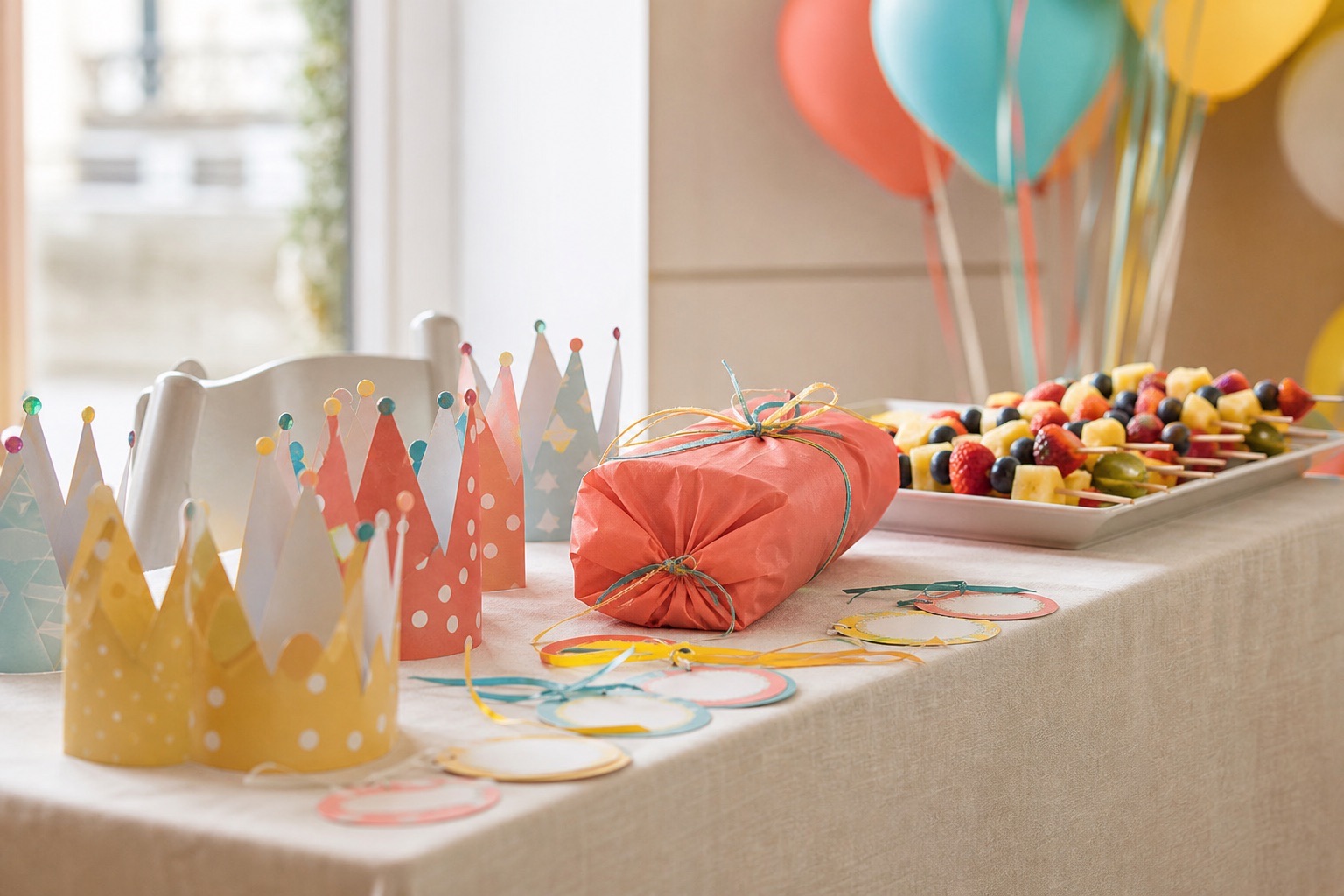
A craft table that runs itself while guests trickle in: name badges, paper crowns or sticker scenes. Arrivers join gently instead of orbiting nervously: the method is a cousin of our everyday craft table. Assign one helper to be the welcome committee; their whole job is noticing the child standing at the edge.
Balloon keep-it-up
You need: two or three balloons
“Don’t let the balloon touch the floor” needs no teams, no explanation and no elimination (perfect for the awkward first ten minutes). Add balloons slowly as more children arrive, and let the game scale itself.
The peak (everyone plays)
Pass the parcel, upgraded
You need: a layered parcel, music, small treats between layers · ages 3+
The classic that still wins, with two fixes from the field: put a small treat between every layer so nobody waits empty-handed, and make the final unwrap cooperative (“the last layer contains enough sweets to share: count them out together”). Waiting with dignity is a skill; designing for it is a kindness.
Freeze dance championship
You need: music · ages 2+
Dance hard, freeze on pause, wobble and you do three jumps and rejoin (no sitting out at a party), ever. Invite the birthday child to be a freeze judge. Full rules and variants live in our indoor games guide.
Treasure hunt, team edition
You need: picture or riddle clues, a chest of small prizes · ages 4+
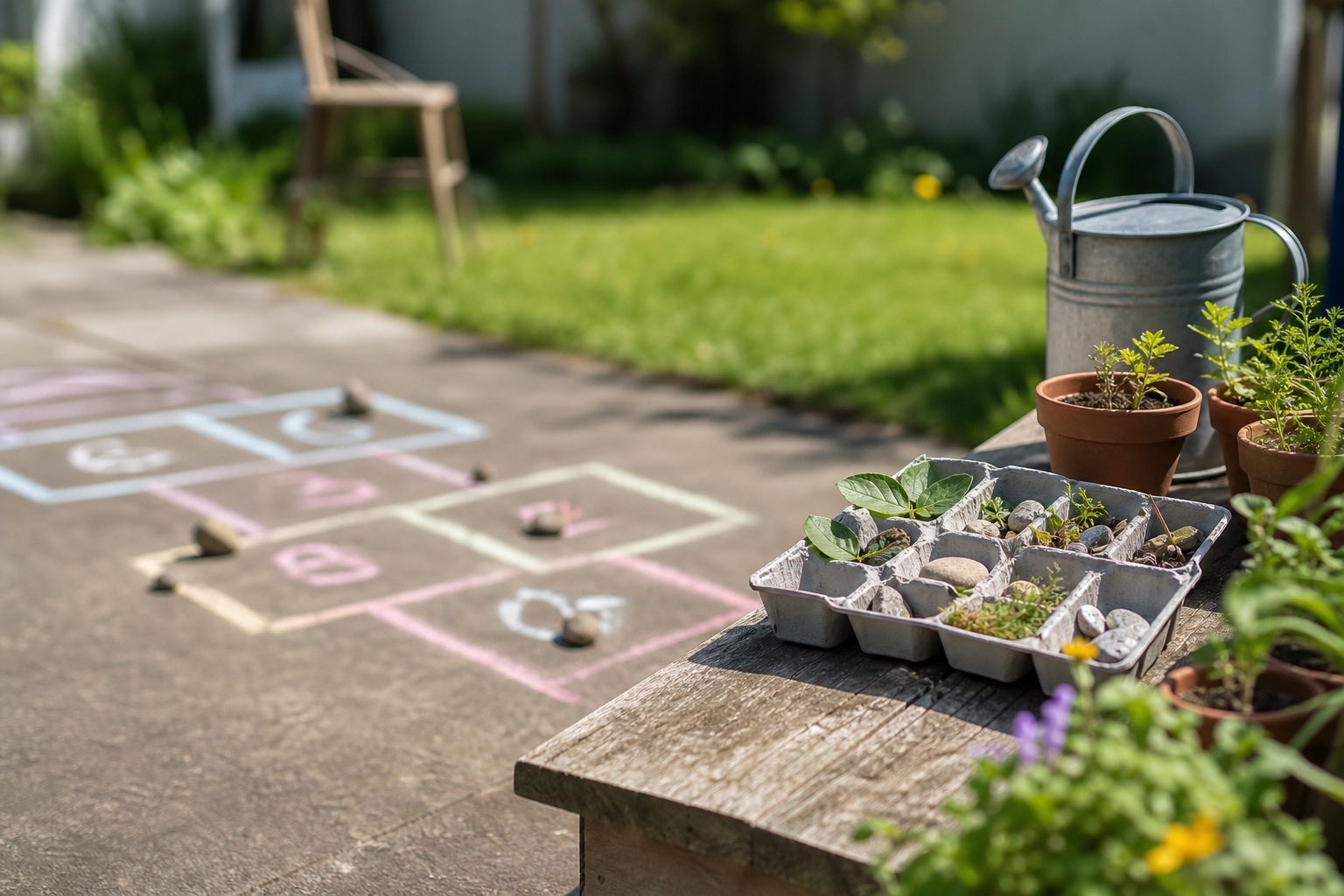
Split into mixed-age teams so big kids read clues for little ones and everyone carries a job. Five picture clues for preschoolers, riddles for school-age. The treasure is a box of things to share, the finding is the prize. Backyard versions borrow directly from our nature treasure hunts.
Backyard Olympics finale
You need: chalk, beanbags, a stopwatch · space required · ages 5+
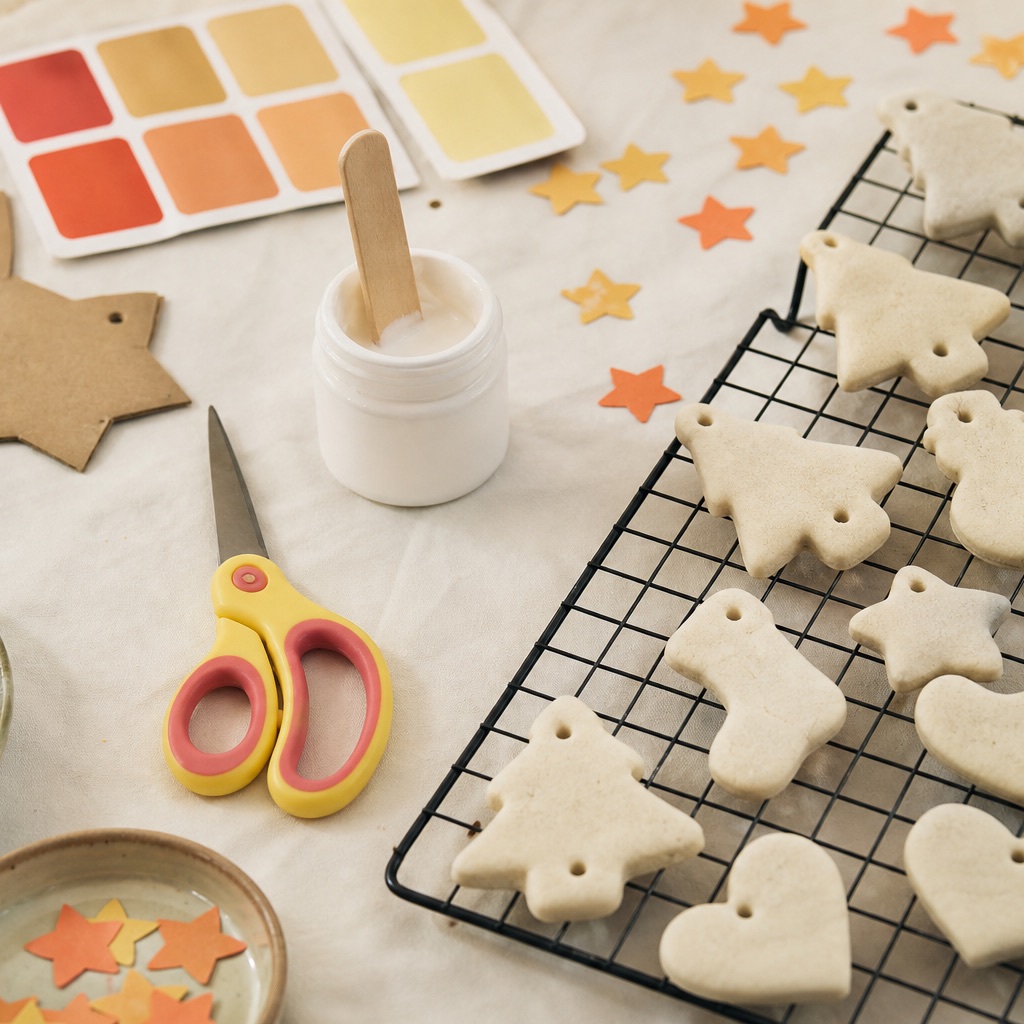
Beanbag toss, long jump, obstacle sprint: scored in “team sparkle” points where every finisher earns for their team. The plan is fully described in school-age activities; at a party, keep events to ninety seconds each and hand out medals made from salt dough (recipe in crafts).
The wind-down
Guess the picture
You need: paper, a pencil
Quiet circle game: a helper slowly draws a cat, a cake, a rocket, and guesses fly. Seated, calm, still thrilling (the perfect metabolic off-ramp while cake is being cut). For the last ten minutes, an audiobook story or shadow-puppet show (plans in preschool activities) glides everyone toward the door.
Grown-up tip: the golden rule of party games is short rounds, no eliminations. Out children become bored children become chaos engineers. If a game must eliminate, eliminated players become judges, cheerleaders or balloon-keepers (roles), not exiles. And plan one game fewer than you think you need; the party always takes its own time.
Sane party logistics
Keep the guest list at age-plus-one for under-sixes; label cups; serve food after the peak, not before; photograph the child, not the table (the table never notices). Recruit two helpers with defined jobs, one runs games, one runs logistics, and you get to be the parent of the birthday child rather than the events manager. The grown-ups’ own party is a different job entirely: Kings Cup rules and the rest of that repertoire belong to an evening when no child is in the house. Cake at the table, wind-down game while it settles, and the last fifteen minutes belong to party bags and goodbyes. If weather threatens a garden party, the entire rainy-day rescue kit converts to indoor party games at a moment’s notice.
If you want to keep exploring, the magazine covers more than party games. Look at the menu at the top of any page and pick a section that fits your week, such as activities, food or family life. One recent piece looks at calm farmhouse decorating, what to keep, what to skip, and how to make a room feel warm in every season. It suits anyone who hosts often and wants a home that stays tidy between guests. Read it here: barn venue celebrations.
Once the games are packed away and the last slice of cake is gone, some families start thinking about a bigger gathering later in the year. If relatives are travelling in and you need a room that fits everyone, it helps to know what to ask before you put down a deposit. You can read our guide to planning a family banquet for the details on guest counts, buffet lines and bar rules. It is a calm next step when the party planning is not quite finished.