The ritual matters more than the book
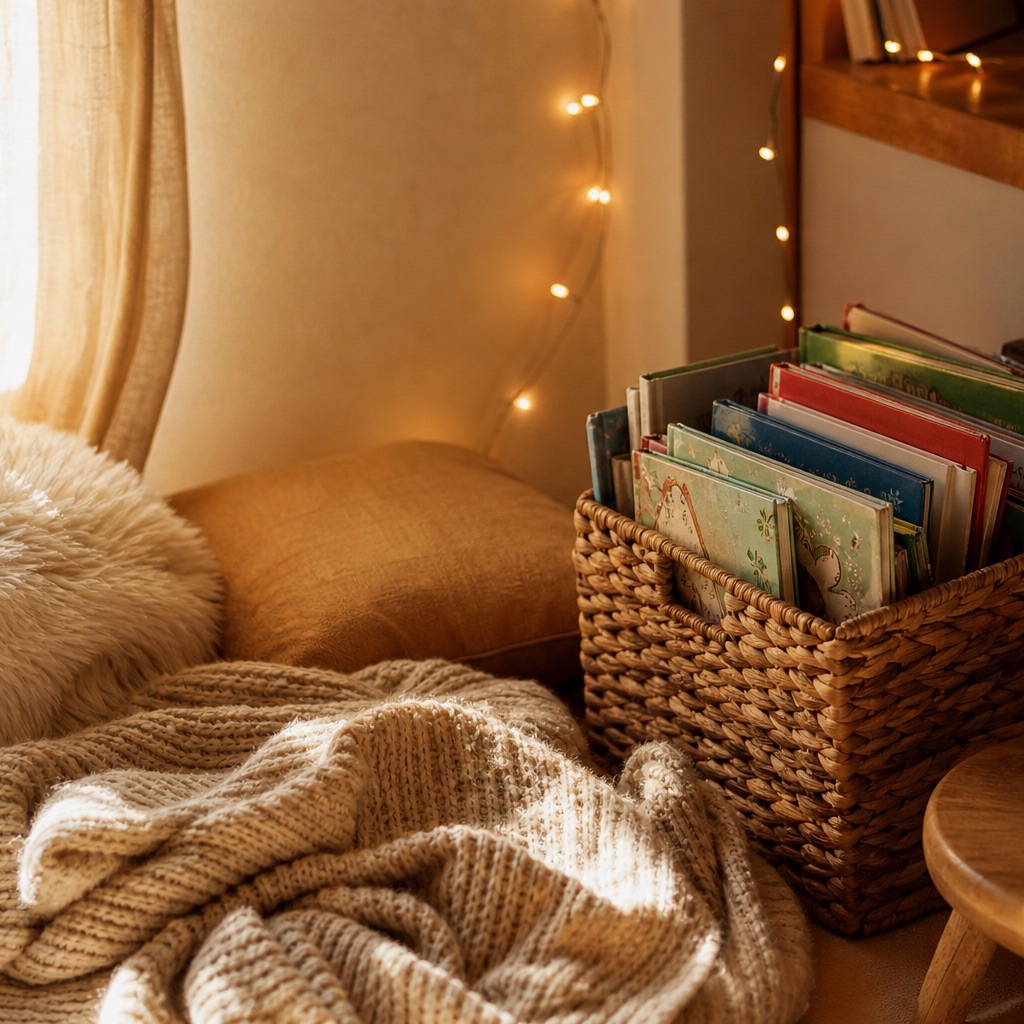
Ask adults who love reading and most describe a ritual, not a curriculum: the same armchair, the same ridiculous voices, the same negotiation for “one more page”. What builds a reader is warmth plus repetition plus access (a child who sees reading as the coziest part of the day will fight to keep it), and that appetite survives homework, screens and adolescence far better than any flashcard regime. Start where you are: three books at bedtime, the library card, the basket of books at child height. Perfection is not required; presence is.
Ages and stages
- 0–2: chew-proof conversation. Board books with one clear image per page are language lessons: point, name, pause. The pause is the technique: leave silence and a very young child will often fill it. Expect consumption of the physical book; it’s developmental, not literary criticism. Ideas for the same stage live in toddler activities.
- 3–5: predict and protest. Picture books with rhythm, repetition and a catchphrase the child shouts on cue. Voice everything (the wolf), the grandma, the timid snail. Retelling a known story with the pages out of order is comprehension, not naughtiness.
- 6–8: the bridge years. Early readers, comics and graphic novels are real reading. Series are powerful: knowing the characters lowers the cost of entry and builds stamina book by book. Keep reading aloud (school decoding is not the same skill as understanding rich language).
- 8–10: the taste era. Fact books, joke books, how-to-draw, novels about everything from football to Ancient Rome. A binge on one topic is a reader doing research. Respect it. The school-age guide pairs well: project plus fact book is a beautiful loop.
The library basket trick
You need: one basket, library trips, zero budget
Keep a rotating basket of ten library books at child height, refreshed every fortnight. Choice is the active ingredient in reading motivation: children who pick their own books read more of them. Include one wild card, a book “above” level, a comic, a cookbook, and let browsing be the whole point of the trip.
Story prompts on the go
You need: nothing but turns
Play “add a sentence” in the car: each person adds one sentence to a growing story, with a rule that every fourth sentence must introduce trouble. Oral storytelling builds the same narrative muscles as reading, and it pairs beautifully with the shadow theater and pretend games in preschool activities.
When a child says reading is boring
First, believe them, then investigate, because “boring” usually means one of four things. Wrong books: offer comics, fact books, joke books, magazines; format snobbery is the enemy of reading. Too hard: drop a level without comment; fluency grows on easy books, struggle does not. No models: children who see adults read for pleasure read more: the book you’re enjoying on the sofa is advertising, and plenty of parents raised on séries TV des années 80 rather than novels became readers later anyway, so a slow start proves nothing. No margin: a child whose schedule is full has no idle afternoon in which boredom discovers a book. Protect some empty time (the case for that is made in learning through play) and keep offering without forcing. Reading wins by attraction, never by conscription.
Grown-up tip: never finish a bad book. Quitting a book models discernment, and the fastest way to kill a reading habit is to make reading feel like homework. Say “this one’s not for us: let’s find a better one” and move on together. Audiobooks count, too: on a long drive or during a rainy afternoon, a story is a story.
Books plus life
The strongest reading lives connect pages to the world: bake the recipe from the cookbook, try the experiment from the fact book, our kitchen science guide was built for exactly that handoff, and build the cardboard castle the novel describes with the craft box. Every bridge between a book and the real world doubles the value of both.
If you would like to keep exploring after this page, the magazine has plenty more to offer. Our activities section covers rainy-day ideas, outdoor games, and a balanced screen-time guide, so there is something for every kind of afternoon. One date worth marking on your calendar is April 30, when families and libraries celebrate children, books, and cultures. You can read the full story behind it and find bilingual books for children to share at home. Pick one page that fits your week and try it together.
If you want to keep going after this page, the magazine has more to offer. One piece looks at how shared Christian faith shaped small towns and public life, and it shows families how to explore original documents together. That makes it a natural next step for anyone who is already reading primary sources with children at home. You can also browse the activities section for rainy-day ideas, outdoor games, or a balanced screen-time guide. Pick whatever fits your week, and read it at your own pace.